AEN banner

Main

Running with Mickey Archives

October 13, 2009

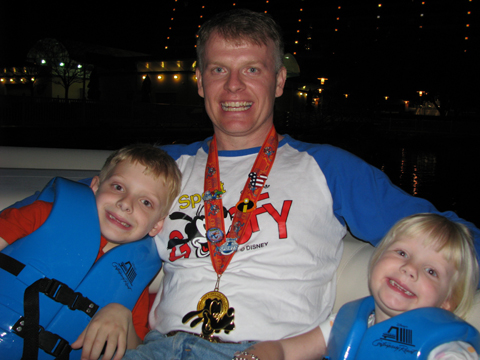
Team All Ears Profile: Trey Brush

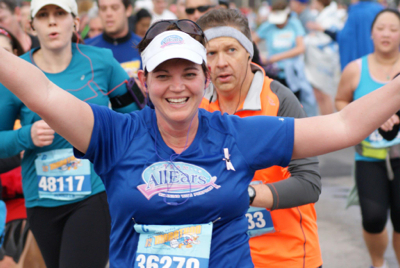
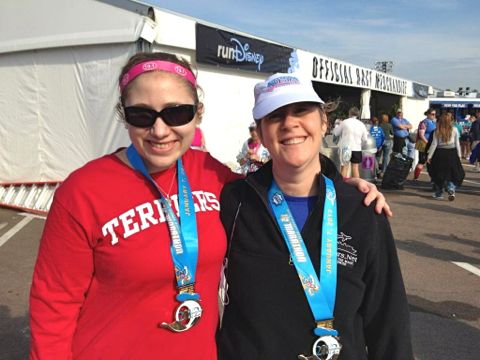
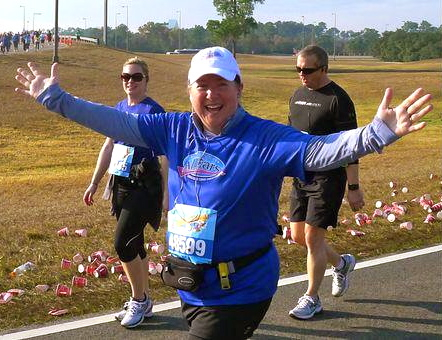
Note from Michelle and Mike: From time to time we will be highlighting the stories of members of Team All Ears, a wonderful group of individuals, who have agreed to raise money for Deb Wills' Avon Breast Cancer Fund by running Disney races in January 2010.

****************************

When I first started to run six years ago, I was just bringing home our first born son from the hospital and realized that if I wanted to be able to enjoy my kids for many years and be able to keep up with them. Running had always been something I had enjoyed. As a natural introvert and a person of reflection I had always just enjoyed my time on the road thinking and reflecting about life.

Since that time I have lost about 75 pounds and many are not able to recognize me out at family gatherings.

I ran my first Disney marathon in January 2007 and ran again in 2008. Since then my reason and motivation for running has changed quite a bit. I still enjoy my time alone on the road and am motivated to stay healthy for my kids, but I remember crossing the finish line on my first marathon ands suddenly had an empty feeling. Was it the first marathon blues? I thought: "Is this it? Is this why I run? Is it for a medal?"

There was not an immediate answer to that. It became something I began to think about on my runs. I began to reflect on the idea of why I was out there running. I began to search for those answers and they would come.

Running always came natural for me. I began to think about running for purpose. I decided then that my running had to be about others.

Deb Wills and All Ears has done so much for my family to help enjoy the magic of Disney. When I heard about the opportunity to help Deb to raise funds for Breast Cancer Awareness I jumped at the opportunity.

Since that decision, "running on empty" has been a thing of the past. Being a part of something bigger and running for a purpose is what motivates me day in and day out. Knowing that at the end of the race that the impact can be something more than a medal is very satisfying.

To say that I love Disney is to say that there is a little water in the ocean. Disney was the location of my first marathon and always my favorite. There is a feeling that I get in Disney that no other race has ever been able to replicate. It is not just the celebration and the crowd and all of the extra stuff but the idea of running through the place that has given me and my family the chance to create so many magical memories is worth every step.

I am very excited to be a part of Team AllEars and look forward to running as a part of our team in January.

Trey.jpg

August 1, 2009

Hello Injuries

I am not a doctor, nor do I play one on television or the internet.

So I am not here to tell you what to do if you have an injury but give you some advice as to how to avoid injuring yourself while training for a big race. When in doubt, always consult a medical professional.

As a jock from way back I have sustained many an injury...the most serious happened while playing basketball....an exploded anterior cruciate ligament which was never repaired and from time to time will remind me to train smartly.

One of the lessons I have learned over the years is to stretch before and after a run. I usually do not start off fast...my first mile is often one minute slower than my last mile of the run. My first mile is certainly part of my stretching routine.

Another lesson I've learned is to vary how I run along the road. That is, when I go on my runs, which are usually early in the morning, I try to mix it up by running on the left, crown, and right portion of the road.

This is important to note if you are prone (no pun intended) to pronation. If you run on either the left or right side of the road for your entire run then you may open yourself to some pronation and possible some uneven wear on your shoes.

It's best to run on the crown of the road but then again there are vehicles to contend with so try and mix it up...perhaps every five minutes make a change.

A few years ago I also discovered that even though I am capable of running faster than my usual pace that if I do so I will pay for it later on. For some reason if I run faster than I should my legs will let me know after the run I did a "no no".

My guess is that this is true for everyone so try to listen to your body and recognize your limits.

Recently on a trip to Walt Disney World I zigged when I should have zagged and had some real issues with the knee. It is slowly healing but each day I think about lacing up and running and I keep reminding myself not to rush it.

Here's the point, if you rush back too soon after an injury you may re-injure and have another setback.

Give yourself and your injury time to recover and then gradually get back into the swing of things.

I should also mention that avoiding injuries goes hand in hand with making sure your running gear, specifically your running shoes, are in good shape.

Everyone is different and so I may change running shoes more often than co-captain Michelle because of my running gait, my weight, etc.

I usually suggest checking out your shoes right around the 300 mile mark and consider replacing them if you feel they are worn down too much or if they do not feel comfortable any more.

I like to alternate between two and three pairs of running shoes....that way I do not wear them out too fast and I have better conditioned shoes for the long run. Basically I can get by one year of training with just three pairs of shoes.

It's good to run in shoes that have stabilizing features. Run in proper shoes.

Overtraining is another way of injuring yourself.

Many people try to tweak their training as they get closer to a big race. Sometimes that training involves more running than necessary and faster running than is necessary. Be careful and just keep your training steady.

Somewhere down the line we'll talk about runner's nutrition. Nutrition can play a part in keeping healthy and avoiding injuries. I'll tell you what vitamins I feel work for me and why.

I take a multi-vitamin each day...to make sure I get at least the minium amount of nutrients to keep me healthy.

My doctor told me that Magnesium is good for joints and knowing how much I run he suggested I make that part of my daily routine.

I also take a baby aspirin each day....should help the blood circulation.

I also take either fish oil or an omega-3 capsule...again to keep things running smoothly.

Finally, and this is probably the most important supplement I take...I make sure I get some Glucosamine Chondroitin in me every day to help me battle osteoarthritis. Glucosamine is an amino sugar that the body produces and distributes in cartilage and other connective tissue, and chondroitin sulfate is a complex carbohydrate that helps cartilage retain water.

This supplement works for me.

Remember, check with your doctor before you go out and start taking supplements.

Remember to listen to your body, not overdo it, and be proactive and hopefully you will escape injury.

June 29, 2009

Pace Patience

The term is “Pace Patience” and what I mean by that is to say, give it time and don’t rush it.

Let’s look at the pace requirements for the Walt Disney World Half-Marathon so that we all understand what those requirements really mean. For the half-marathon all participants must maintain a 16 minute per mile pace. That is, the “official” pace requirement calls for all race participants to cover the 13.1 mile course in fewer than 3 hours and 30 minutes.

I say…No. It’s not true.

Let me explain.

In the past the half-marathon has assigned participants to one of several waves and corrals. In recent years the number of participants has also influenced the race officials to stagger the start of these corrals and waves. The start time of your wave and corral is one factor regarding your pace, but there is another factor which not many people realize and that is exactly when that pace clock begins for your particular wave and corral.

So when does that clock start ticking? There has been a lot of talk around this topic and from what I understand it begins when either the last entrant in that wave crosses the Start or when the very last participant in the entire field of runners crosses the Start. For our purpose let’s say each wave will have its own pace clock.

So think of this. If your wave/corral has a ton of people and it takes as much as five minutes for that last person to cross the Start line then essentially those up front have an extra five minutes to play with over the entire length of the race course. That’s 300 seconds divided by 13.1 miles or about 23 seconds per mile.

Wait, it’s even better than that. It’s actually a tad over 29 seconds a mile…and every second counts. How did I come up with this number? Well, in the past the pace requirements are strict for only the first10.2 miles of the 13.1 course or 78% of the distance. That means participants have almost a full 5K in which they can relax and not worry about pace.

So let’s break this down a bit more. Historically there are four pace checkpoints for the Walt Disney World Half-Marathon. If they have not changed for 2010 they are still:

• The Walt Disney World Speedway which is just beyond the Magic Kingdom toll plaza. It’s
about 3.5 miles into the race and to avoid being swept all participants must reach that
mark within 1:11:00 of the Start. That’s 3.5 miles in 71 minutes.

• The next checkpoint comes just before entering the Magic Kingdom. It’s right around the
Magic Kingdom Park Security Gate. Participants need to reach that 6.3 mile mark by 1:56:00
or face the sweep bus.

• The next checkpoint is a significant one for many people. It’s the 8.1 mile mark right near the
Daisy portion of the Ticket and Transportation Parking Lot and what’s important here is that
it’s right around this point that many participants begin to fade. I always suggest to those
training for their first half-marathon that they should focus first on building up enough stamina
to do at least 9 miles. Anyone who can do that should have no problem completing the
course. This checkpoint requires that the participants have 8.1 miles under their belt within
2:25:00. My personal feeling that if anyone can make it through this checkpoint then they
should be fine…but there is one more checkpoint.

• The last checkpoint is only 2 miles from the last one and it’s the 10.2 mile mark at the World
Drive Ramp on the way to EPCOT Center Drive. The magic number here is 2:58:00. Again,
this is the LAST checkpoint; the last time participants can be swept. Once you get past this
checkpoint you are home free. Think of it this way…if you can cover 10 miles in about three
hours you are then looking good to finish the half-marathon in the “official” allotted time.

Now why do I mention these checkpoints at this time? Marathon Weekend is still six months away.

I wanted to point out these checkpoints to anyone doing this race for the first time to give everyone a sense as to just where the sweep busses will be and to hopefully give everyone an incentive to at least begin thinking about pace.

Think about what your pace was when you first starting your training. If you kept a log and recording your distance and time for every run you would be able to track your progress. If you do not maintain a running log maybe you should consider starting one today.

A running log can be a wonderful support tool for everyone, not just the novice runner.

A few years back after not running for a year I decided to light a fire under myself and sign up for the Walt Disney World Half-Marathon.

After my first time out running I was appalled as to how out of shape I was.

turtle.jpg

I will share with you that on that cold March morning I barely did two miles at a pace of 17:36 per mile. When I realized just how much I was out of shape I decided to keep a log and track my progress. One month later my pace was down to the low 14s; the next month it had dropped to the low 12s. It then became a struggle to get my pace even lower but every day I would look at that running log and it would show my progress.

The point I want to make here is that I really was not trying that hard to improve my pace. I was improving because of three important factors. First I was running almost six times a week and so I was getting in shape.

Secondly, I decided to eat as healthy as I could which led to the third factor…losing weight. I was pulling less weight and so my legs were finding it easier to move everything…I did not have to concern myself with pace.

Doing all that…consistently stuck to a running plan, ate healthy, and lost weight, had my pace settling in the low 11s and on one September morning I ran at a 10:1 pace.

I had improved my pace without trying any of the techniques that so many people discuss as ways to increase your speed over long distances.

You may want to consider checking your pace now to see how much in line you are with the checkpoint times.

I’ve always felt that stamina is the priority before pace. It’s important to train your body to work over a long stretch of time…13.1 miles is not covered in a few minutes…more like a few hours.

If you are able to train to the point where in one outing you can cover 9 miles then you are pretty much ready to tackle this race.

Along the way your pace will pick up without you having to consciously work on it.

In a month or so I will revisit the matter of pace and will talk about things you can do to better your pace. There are no miracle running shoes or super running gels to help you improve your time.

A steady training regimen is the best way to improve your speed.

So have some “pace patience” and keep training and getting into shape….add a few more minutes to each workout…build that stamina…your patience will be rewarded.

cheetah.jpg

June 16, 2009

Pace: The Final Frontier: A Novice's Perspective

Here is Michelle's perspective on pace, especially when it pertains to the Walt Disney World half-marathon.

When I first started running, worrying about pace was the furthest thing from my mind. My only prior running experience had been the one mile warm-up run that our coach tortured us with before practice when I was on the high school tennis team. Then, pace was not a consideration. Getting the running out of the way as quickly as possible so I could get on to the court was all I cared about.

Fast forward twenty-plus (ahem!) years and pace still wasn’t my first concern. I was signed up for a half-marathon…that meant that I needed to manage 13.1 miles without dying! Now that required one mile run of my youth seemed like a cakewalk. I was able to move from running one to two to three miles pretty quickly….then to four…and then gradually to five… but this “pace” thing that people mentioned never clicked with me….until the first time I hit six miles.

One day I was running along and all of the sudden I got into this amazing groove….my head got very clear, I felt much focused, and I noticed that I was running at a constant gait. “Ah, yes,” I mused, “I’ve found my pace.”

I’m very much still a novice runner, but for me “pace” can be defined as a constant and continuous speed at which a runner or walker moves. Your average pace is calculated by simply dividing the time you ran by the distance you covered.

When a person is running on a treadmill, one’s pace is controlled by the machine….and you can adjust it depending on your fitness and comfort level. When you’re running outside, as is the case of the Disney Marathon Weekend races, your pace is something that you have to find on your own. I have found that many things can affect my pace. If I hit the pavement and am not well-rested, it takes me longer to find my pace. Terrain is another thing: If I’m running a route that has variable elevations (which is often the case where I train), my pace can be also be varied, but I can find it and stick with it much more quickly if I’m running my indoor track at the YMCA. The amount I’ve eaten also affects my pace: for me I’ve found that I do best on an empty stomach. Each runner has to find the things that work for him or her (which is one reason why we need to spend so long training, so we can take the time to find out the things we need to learn to have a safe and successful race before you go to that starting line).

For the Disney races, runners need to run, walk, or run/walk at a pace of 16 minute miles, so when training for these races, it’s important to keep track of what you’re pace is. Although I logged my mileage and time, I didn’t really start to think seriously about my pace until I hit nine miles. At that point I worked a little each week at increasing my speed.

I’m not an Olympic athlete by any stretch of the imagination, but I didn’t find the required pace to be that daunting and finished somewhere in the middle of the over 12,000 people who ran with me in 2009. I can make that statement in hindsight and realize that I sound all calm and collected, but I will tell you that I was definitely concerned about pace while I was running. Finishing, regardless of whether I had to crawl over that finish line on my hands and knees, was my only goal. Nothing was going to stop me! I remember running by people who were stopping to get their photos taken with characters and thinking, “HOW CAN THEY STOP?! Must keep running….must keep up the pace.” Now, as veteran, I am looking forward to running my next race without that panic that I will be able to keep up the pace.

One thing that has surprised me as I’ve learned to run is that, for me, pace is not something that gets turned on as soon as I lace up my sneakers and head out the door. I’ve talked to several other runners who have said the same thing. Each time I run it takes me about two miles to find my pace and find that groove. When I get there it is a wonderful feeling, but it takes some patience. It’s well worth it, though.

June 1, 2009

Long Distance Running Gear

Since we have different experience levels with our running, we’ve decided to create a series of blogs that show different perspectives on a variety of running topics.

This week we’ve decide to talk a bit about running gear: what are the essentials?

Michelle’s Take on Running Gear

As someone new to running, my first thought was that I didn’t need anything special. Running involves grabbing a well-worn pair of sneakers, some comfy socks, an old pair of shorts, a t-shirt, and heading out the door. As a tennis player, I knew the importance of having the right type of shoes for the court, using the right type of racket and grip, but never thought I needed to give running gear a second thought. Throughout the year when training for my first half marathon, I learned that it’s a little more involved than that, but it isn’t rocket science either.
I would love to report that re-examining the gear that I was using came from hours of careful study and consultation with experts but, in fact, it came simply as the result of a growing collection of blisters from the socks and sneakers I was using, running tops that seemed to hold in the sweat, and shorts that never felt quite right.

The first things to go were my sneakers. After several miles, I realized that my all-around athletic shoes did not provide the comfort level I needed for the repeated motion of my one-to-two hour training runs. I needed real honest-to-goodness running shoes. While many people suggested that I go to a running store and have my gait analyzed, I thought a good first choice would be to visit my local sporting goods store and see if I could find a pair of shoes designed for running that would be comfortable. That worked for me. I broke them in by wearing them around the house for a week or so and then took them out on the road. After that, I used those sneakers only for running and nothing else. I realize that others might have issues that require that an expert help in the selection of running shoes, but a $70 pair was perfect for me.

running%20shoes2.jpg

My next revelation was that all socks are not equal. Each time I ran I would choose a comfy pair of cotton athletic socks and thought that would be fine. Along the way, some runner friends mention that wool socks are actually better, but I thought, “Pssssshaw! Wool socks?! These will do me just fine.” Nope. After a certain distance, especially in the warm weather, my feet would get sweaty and, as you might have guessed, the cotton socks held the moisture in very nicely. Then came the blisters. Not fun. I ended up investing (and at $10-$15 a pair, I do mean investing) in a pair of SmartWool socks. What a difference! I guess when I thought of wearing wool, I was thinking of the scratchy sweaters I wear during our long, New England winters. SmartWool is thin, comes with different levels of cushion, and truly wicks away the moisture. Now I own three pairs and won’t run without them.

runningsocks2.jpg

My next investment was in some running shirts. I was pretty happy just wearing cotton t-shirts for running, but then the charity I was running for sent me a “real” running shirt as a gift….and I loved it. The mesh allowed the moisture out, but kept me warm during those cold, early-morning runs. I bought a few more and was all set.

runningtop2.jpg

Underneath that shirt was my last important purchase: a really good sports bra. Being a sporty sort of person all of my life, I have found this is one area where you get what you pay for. I don’t cut corners with a sports bra because when I’m running all I want to worry about is running, so I pay a bit more for a really good quality one.

Because I live in an area that gets pretty cold in the winter, I also found that I needed to invest in a few other things: running gloves, running tights, and a long-sleeve running shirt. I picked these up on an as-needed basis and was very careful to just buy one of everything so that I could see if I used the item first.

So, I now realize that just as the case with any other sport, if you’re going to stick with it, it’s important to have the right tools for the job, especially when you’re putting in the time required to successfully complete a long-distance run. The right shoes, socks, top, and other gear has made me more comfortable and kept me healthy and able to continue training.

Mike’s Take on Running Gear

Comfort. When I think about running gear comfort is the priority. It can take you a while before you find the right combination that works for you, but it is worth the effort. Think of it as an investment towards helping you achieve your goal. Let’s face it, comfort will make the journey that much more enjoyable, regardless of the distance. Comfort is priority one.

The most important pieces of running gear are your running shoes and socks. If you are planning to run the WDW Half or Full Marathon in January you need to determine ASAP what shoe and sock combination will work for you over the span of two, four, or even six hours of running and/or walking. Actually it’s more than that because you will be in those shoes from the time you leave your room until you return from the race…easily anywhere from seven to as much as 12 hours. So the shoe and sock deal is VERY IMPORTANT.

I am not particularly 100% in support of the idea of going into a running store and having the personnel watch you display your gait to determine your ideal shoe, but it is definitely a start. The issue I have centers around who is making this call. Hopefully, we are talking about experienced runners or someone who really can look at your gait and come up with the type of shoe that best fits your needs. You don’t want to depend on a sales clerk in a sports superstore because most likely that person may know more about baseball gloves than running shoes. If you go to a running store your chances of getting the right help are much greater.

Once you know the type of shoe for you, then you need to look at all those models that offer you these components…stability…arch support…whatever. Prices will vary so you may NOT want to purchase your shoes in that running store unless you know their prices are compatible with the superstores. Try your shoes on and make sure there is not one iota of discomfort. If they feel comfortable then go with them…just do me a favor…try at least three different shoes before deciding….don’t buy the first pair you try until you have tested at least two other pairs.

Although shoes may feel comfortable in the store, you really won’t know for sure as to whether or not they are right for you until you have spent at least an hour in them during a training session, be it a run, a walk, or a combination of the two. I’ll take it one more step. You may not be able to decide until you have trained in them for a week. So I guess I’m suggesting that you give your new running shoe several training sessions before deciding if it is the shoe for you. If it is, then take note of the model and start looking for sales because running shoes can be pricey.

running%20shoes4.jpg

For the record over the last ten years I have been running in the same model shoe. It works for me so I stick with it and whenever I see a sale I purchase another pair. Here’s a tip: if you settle on a shoe that from year to year goes through a “model upgrade” then think about searching for last year’s model to save money. If in December of this year I see a 2010 model going for $89 and the still new 2009 model going for $59 (to move the inventory) guess which one I’m buying? I have about 10 pairs of running shoes all the same basic model…Ill stick with this model for as long as it’s around. I hope when you find your perfect shoe that you too have a long term relationship.

I’m not going to tell you what kind of socks to wear. I use basic running socks, ones that wick if possible. Let’s face it, if you have a certain affinity for certain sock material then stick with it for your training and the race ahead. It is somewhat true that for some folks the marriage of socks and shoes are VERY important. It is to me too but it’s simple, give me comfortable socks and I’m fine. I do suggest finding the softest socks you can…not the thickest, but the softest.

runningsocks3.jpg

Running shorts/tights/pants come in all types of fabrics. Again comfort is the key here and once you find what works for you it’s not only important to stick with it but also to supply yourself with an extra pair or two. Remember, the race you are planning to do in January will have you spending a lot of time with your running gear so for sure you need to have comfortable shorts. And a word of advice, go into a running store and invest in the lightest material shorts you can find.

running%20shorts3.jpg

Running tops will also be something that for some folks is of vital importance while others will not care. The material always comes into play here and if you have a preference by all means go with it. Over the last several years wicking material seems to be growing in popularity but if you have never worn it, and especially if you have never run with this material you need to try this before wearing it during a race. The bottom line is that you need to find something that will be comfortable for several hours.

runningtop1.jpg

So that's about it for running gear...at least for now.

Finally, and this is the bottom line, whatever you train in is what you should race in. That is, the comfort level you have for your training runs should be the same for the race. Don’t make the mistake of saving that new pair of shoes, socks, shorts, or top for race day. Test them out…break them in…don’t take a chance.

That's our take...gear up.


runners%20club.jpg

May 1, 2009

Michelle and Mike: On Courage First

When we hear of someone planning to run a long distance race, like a half or full marathon, we often take for granted the courage required to make that commitment.

Regardless of whether that decision is made by an experienced or novice runner, it’s not a decision to be taken lightly.

With that decision comes the realization that a certain type of courage is needed.

How?

Take the novice runner. Imagine you have never run a race before, much less a full or half marathon. Heck…you may have never even run a mile in your life.

This person is staring into the unknown.

Why the unknown? Well, look at it this way….this person has never run before so this person has no idea what to expect from his/her body. Also, this person may not fully understand the commitment to training that is required in order to be properly conditioned for this event.

Then of course is the event itself.

What kind of preparation is needed?

What is expected on race day?

What takes place before the race?

What happens during the race?

What happens after the race?

What else?

So it takes a special kind of courage for someone who has never run before to commit to running in not just their first race but a half or full marathon.

Last year Michelle decided to run…for the first time…having never run in a race before…but wanted to do the Walt Disney World Half-Marathon.

How did she see how courage plays into such a commitment?

In her own words:

“Courage. That word takes on a lot of meaning, depending upon the context in which it’s used. When we’re talking about running a race, one might think of the courage one must draw upon to get to the start line on race day….and that certainly does take some fortitude…but what about the courage it takes to take those first steps…?

As a first time runner, who had never competed in a race before, the first big step for me was to sign up for the 2009 Disney Half-Marathon. It took some courage. By submitting my name, by paying the registration fee, I was, in essence, challenging myself and making a promise to myself. By clicking that “Register” button I was challenging myself to consider that I could, in fact, commit to the training. I was challenging myself to start to tell my friends and family that I was going to do this. I was promising myself that I would set aside the time to learn about running, to ask many questions of my coaches, and to do everything I could to prepare myself to get to that START line in the best shape possible that I could to finish the race.

We must call upon courage when the outcome is unknown….when we know that there are difficult struggles ahead, but when we know we have the strength to do whatever we can to get through. “

Those are the thoughts of someone who was staring at not just her first half-marathon but her first race EVER!

The courage Michelle needed to gather was different from that which Mike, and experienced runner, had to call upon, for his first half-marathon.

You would think that an experienced runner would have far less of a need to find the courage to sign up for such a commitment as a half-marathon.

Think again.

Mike tells us:

“I registered for my first half-marathon at the tender age of 55. Although I had been running off and on for some 38 years I had never run more than 9 miles and basically averaged about 6 or 7 miles a day.

I wasn’t sure if I could do 13.1 miles

I was also concerned about an old basketball injury that resulted in my left knee no longer having an anterior cruciate ligament to keep it stable.

My orthopedic surgeon years ago had recommended no more than a 10K distance per day…otherwise there would be possible “complications.”

So my fears were well known...age and injury were at the top of my list.

I also knew a bit as to what it would take to commit to the training for this race.

So as an experienced runner I knew what I was up against and needed to muster courage somewhere to face these known obstacles.

I’ve always wondered what it would be like to do a full marathon but was not ready to tackle that mountain….but a half-marathon seemed doable.

I knew that signing up for the race and getting to the Start was a sign of courage…and that is what all that are doing their first half or full marathon should understand.”

Signing up for a long distance race…regardless as to whether you are either a novice or experienced runner takes courage.

It’s your first step.

There is no looking at it in an other way. To accomplish this feat you need something important…

…courage first.

We congratulate our Team AllEars members and everyone who has signed up for the ½ or full marathons, but we’re especially proud of our new runners, who took that first step, who have shown the courage it takes to simply register for the race.

Let’s do this!

April 19, 2009

Welcome to Team AllEars® Running with Purpose!

Co-captains Mike Scopa and Michelle Scribner-MacLean recently announced the formation of Team All Ears® now training for the January 2010 Half and Full Walt Disney World Marathon.

cocaptains.jpg

This is the new Team AllEars Running Blog. Mike and Michelle will be posting training ideas, tips and more as you prepare for your January run at Walt Disney World

How to Join

For you to join the 2010 AE Running Team you need to be registered for the 2010 Walt Disney World Marathon or Half-Marathon.

We will be focusing on helping everyone train for that weekend and we are excited for those who are planning to do either race for the first time as well as those returning.

We are striving to help not just our team members reach a specific goal but also looking to help others in need and so we are asking all who become members to work towards raising $500 towards Deb’s Avon Breast Cancer Fund.

Again, for more details, check out the Official Announcement of Team AllEars!

If you would like to become a member of the AllEars Running team please send an email to Michelle at michelle@allears.net and tell her why you want to be on the team and how you hope the team can help you.

About Running with Mickey

This page contains an archive of all entries posted to Team AllEars® Running Blog in the Running with Mickey category. They are listed from oldest to newest.

Team AllEars is the next category.

Many more can be found on the main index page or by looking through the archives.

Copyright © R.Y.I. Enterprises, LLC, All Rights Reserved, 1999-2009
Copyright © DWills, All Rights Reserved, 1996-1999
As to Disney artwork/properties: © Disney. All trademarks, service marks, and trade names are proprietary to Disney Enterprises, Inc., its subsidiary, affiliated and related companies, as the case may be.
AllEars®.Net, All Ears® Newsletter and any other properties owned by RYI Enterprises, LLC
are not affiliated with, authorized or endorsed by, or in any way officially connected with,
The Walt Disney Company, Disney Enterprises, Inc., or any of their affiliates.
Read more ABOUT US or ADVERTISE with us.
For official Disney information, visit http://www.disneyworld.com